

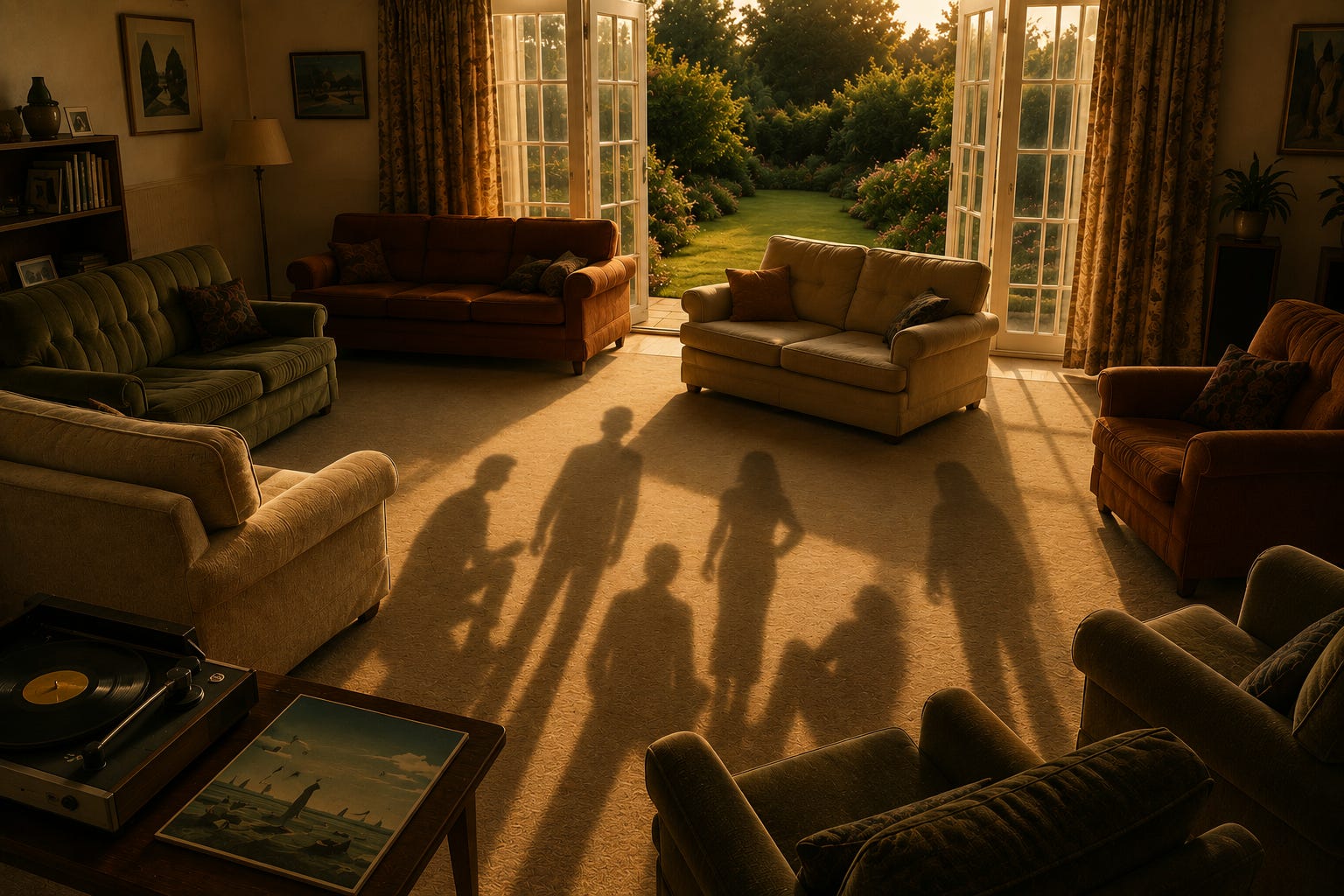
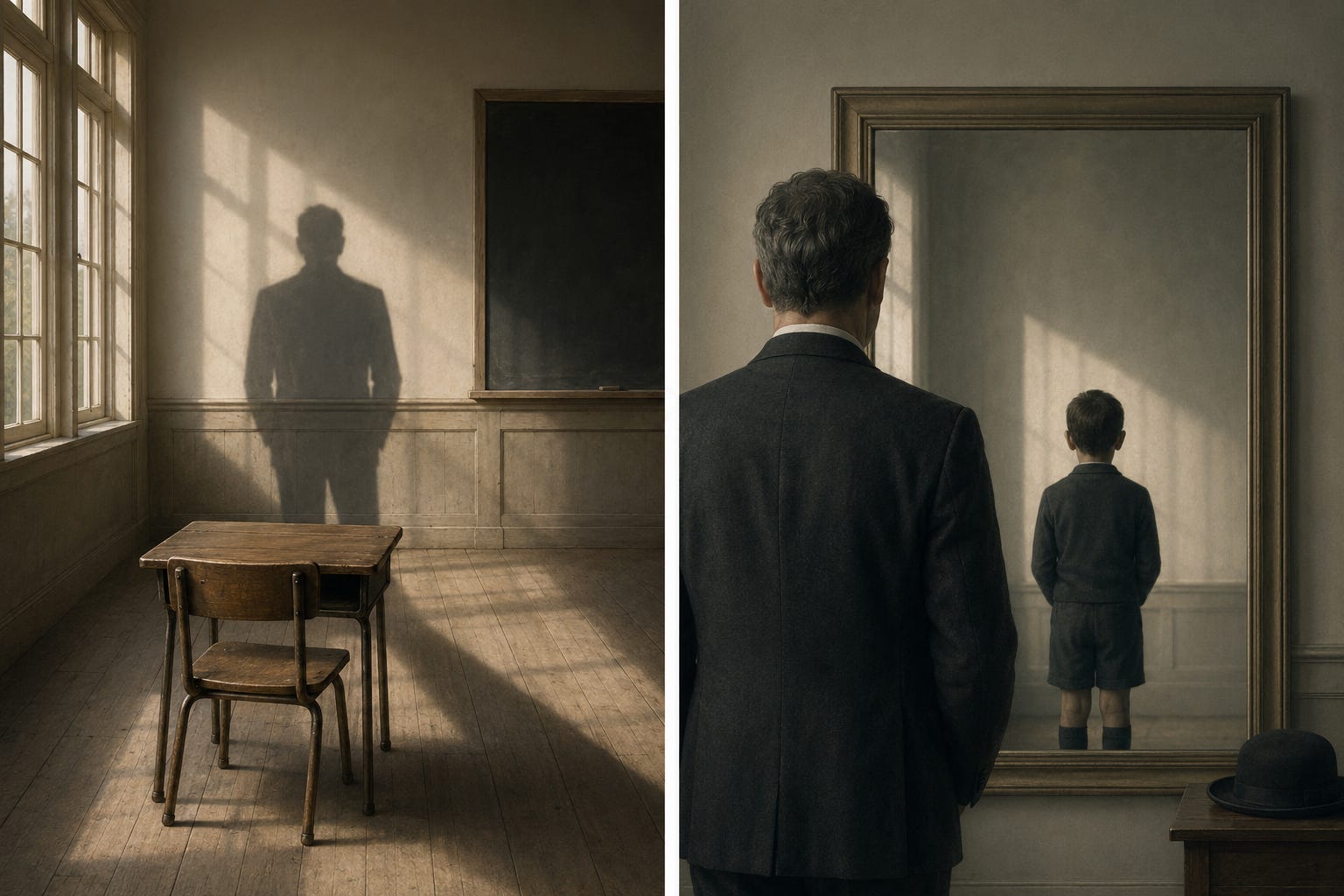
At eleven years of age, I sat an exam that had been rebranded as a Verbal Reasoning Test, though everyone still called it the eleven-plus. I had practised versions of it for months, the way children practise things they sense will be used to sort them. I came third in my year. Two girls beat me. From that point on, I was a boy with promise, yet nobody asked me whether I wanted the label. I have spent most of the decades since, trying to live up to a standard I never set myself, and often not quite managing it, and yet somehow still trying.
By the time I entered the Upper Sixth form I had taken on everything a school could offer at once: three A-levels, a retake of an O-level I had failed, an O-level in Economics and the ubiquitous General Studies exam. The debating team, the clarinet in a youth orchestra, my first serious relationship, the stage management of a school production, and the responsibilities of being elected by my peers, Head of Sixth (the Comprehensive School version of Head Boy in the Grammar School system). I did not yet recognise this as a pattern. I just recognised it as another busy week. The breakdown that followed, mild by adult standards, devastating at seventeen, was the first time the promise and the person carrying it came apart at the seams. I did not get into Bristol to read the Politics, Economics and Philosophy degree I wanted. I went to an unremarkable, lesser-known college in Northampton instead to read Business Studies. I carried a romantic idea of academia I had mostly invented from novels, and built a life there I would actually not trade for the one I had planned.
Before I left the school for the last time, one of my final duties as Head of Sixth was to present it with a gift from our year group.
We had chosen, collectively, a framed print of Salvador Dalí’s The Last Supper. As far as I know, it still hangs near the Head Master’s office, nearly half a century later, though I do not know for sure. I have never returned.
We were the first full year group in a school that had opened in 1971, and for all our years there, there had been nobody above us. We were not following a path. Perhaps we were mistaken for one.
Financial services arrived the same way college had; not chosen, simply what remained. Britain in 1981 was not generous to new graduates. I answered an advertisement seeking six intelligent people, no salary, commission only, and the only qualification required was fifty names of people I could cold-call. I provided them. I became good at it, in the way that desperate, broke, newly committed men are often good at things they will later be ashamed of having been good at. The structure encouraged you to spend beyond your means so you would need to sell more to cover it, and for a while I went along with that too. I left to build something more honest, an insurance brokerage of my own, and for a few years it worked, until Black Friday arrived and clients began cancelling policies faster than I could write new ones, and the commissions I had already spent were clawed back from underneath me. I nearly lost a house that year. It would not be the only time.
What I have left out of that paragraph is not absent because it didn’t matter. The marriage. The daughter and son born not long after. The salaried job I took and didn’t love, then the one I did, for a decade. It is absent because this essay is not really about financial services. It is about what a person does with a verdict handed to them at eleven, and financial services is simply where mine happened to land me for twenty years.
Here is the part I did not understand until I started writing this down: the other thread never actually broke. While I was building sales forces and writing policies, I was also organising the visiting bands at my college, bringing in a street theatre troupe called 7:84, and once, memorably, U2, a booking I shared with a dear friend who knew them before I did, back when it was still a gamble rather than a certainty. None of it felt like a career. It felt like the thing I did alongside the thing I was supposed to be doing. You do not notice a thread like that until you are far enough along to look back and see it running underneath everything, unbroken, while you thought you were living a different story entirely.
I reached the Royal & Derngate Theatre through the box office, on a fraction of what I had earned before. It was only once I moved into the theatre programming department that I understood something about regional theatre that the people who had arrived through art college or a drama degree did not seem to want to say aloud. The commercial bookings, the artists with mass appeal and limited critical standing, the ones some of my more traditionally trained colleagues regarded with faint distaste, were the reason the producing work, the actual art, could exist at all. Tickets paid for ambition. I had come to programming sideways, through festivals and box offices rather than seminar rooms and the stage, and I felt that distinction more keenly than I let on. I do not think less of theatre for needing both kinds of work. I think more of myself for finally understanding that I had been doing both kinds, in different costumes, since I was eighteen.
I left the Royal & Derngate to enter a marriage that had never asked me to make that sacrifice. The marriage did not last. That ending was hers to make, not mine.
Those first eight years in theatre felt, more than anywhere I had been since my college days, like arriving somewhere I already belonged. I never left the arts. America just gave me another twelve years of it, and more to follow.
These essays arrive fortnightly. If any of this sounds like something you want to read, or something you are living through yourself, then I am glad you found your way here.
Steve Scrivens
Montpelier, Vermont
really enjoyed reading this Steve 🤍
"Sideways." There's a whole life in that word. We mistake the side path for a detour because someone handed us a different map too young. But the things that keep tugging at us were never distractions. They were directions.